The Milkweed Diaries

Sunday, April 27, 2008

Planting parsley


Today we planted heirloom Italian flatleaf parsley, one of my favorite herbs. It can really be considered a vegetable, too--I like to eat bunches of parsley chopped up and cooked with other greens. Parsley is SUPER nutritious, especially good for women -- high in iron containing vitamins A, B, C and trace minerals. It also has a long medicinal history.

In any case, I love parsley.


After we got our 12 little starts in the ground, we put up a reemay tent (below) to protect them from too much UV light since they are fresh from the Sugar Creek Farm greenhouse. We'll "harden off" the tender plants by exposing them to more and more direct sunlight each day.


The big plants in the front of the photo are Allium Giganteum, which I hope will make supergigantic purple flowers later this spring....

Spring is here, spring is here, spring is here!

Saturday, April 26, 2008

Nettles Patch!

Christopher found a big patch of stinging nettles on our land down by the river ... hurrah!

We had just been craving nettles and talking about how we needed to go to some of our favorite old patches around town and harvest some, since this is just the right time of year for tender young nettles.

Picking nettles (usually at the Pearson St. Community Garden) has been a spring ritual for me for years, and it's been a magical shared experience with several close friends. There's something that feels ancient and vital about nettles to me. They're an early bright blast of green from the wild that just tastes like spring. Tart, wild, and full of chlorophyll, they even look like a little green explosion. Every April or so, C and I both start feeling the urge to get out and get us some nettles, and make teas, soups, quiches, or just eat them plain after a good quick boil. So how exciting to find some right here on our land!

We walked down to The Patch this eve for me to get a look at it, and to pick some. There are blackberry brambles mixed in and a good 12 x 12 or so patch of young juicy hearty NETTLES!

Besides being delicious and making you feel tuff/punk rock when you pick them (because they're not called stinging nettles for nothing), they are medicinal and super-nutritious. They are full of iron, calcium, and bright green spring juju.

C. is making nettle fritters for dinner, using some of last year's Sicilian Silver garlic and some yummy local eggs. After today's visit to Sugar Creek Farm, we were already feeling pretty high on plants, and nettle fritters, I predict, will take us over the edge into full-on, bright green, spring plantworld bliss.

Thursday, March 27, 2008

Farming as Fashion?!?


I just read an article from the NY Times fashion and style section which heralds the "new fashion" of young farmers. Its tone is deeply irritating and condescending, but at least the information is getting out there in some form or another ("Some young urbanites are starting to put their muscles where their pro-environmental, anti-globalization mouths are.") At left is a pic of some sweet and well-intentioned looking liberal arts majoring new farmers, from the article, "Leaving the Trucker Hat Behind," which starts off with the tart barb, "Their carhartts are no longer ironic."

They do get some things right (sort of) though, and I suppose it is encouraging that getting into growing food is enough of a trend to get the attention of the NYT, even if it is the style section.

Thursday, March 13, 2008

Bees & Other Beneficial Insects


Honeybees at work.....


After some inspiring bug and bee classes at this year's Organic Growers School (www.organicgrowersschool.org), CF and I are fired up to become beekeepers and more committed than ever to encouraging swarms of beneficial insects to make their homes on our land.

I took a great "honeybee stewardship" class from Diana Almond, where I learned a ton of facts, including these:
  1. Honeybees and flowering plants co-evolved, starting about 100 million years ago.
  2. Feral bees are virtually nonexistent now in North America.
  3. The number of domestic honeybee colonies in the US declined from 5.9 million in the 1940s to 2.7 million in 1995.
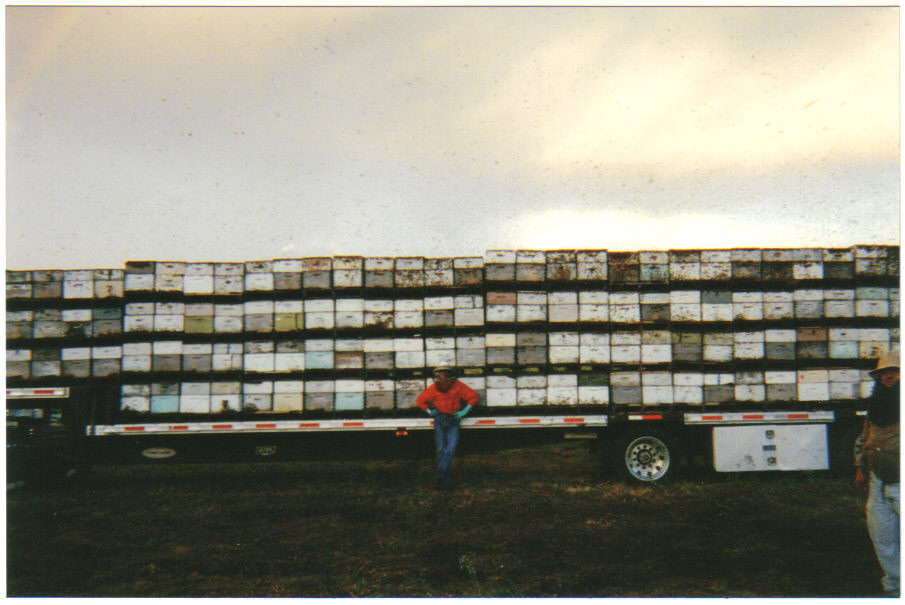
  4. 2/3 of the remaining 2.7 hives are "migratory" -- meaning that they are mounted on the backs of 18-wheeler trucks and driven around all over the country to pollinate various commercial crops. 1 million hives are needed for the California almond crop alone.
  5. 1/3 of what we eat and drink, and some of what we wear, comes from plants needing pollination and 80% of that pollination is done by honeybees.
  6. Non-insect pollinators (mammals and birds) are also becoming extinct or threatened at an alarming rate.
So, we were already planning to keep bees, and already knew that it was an important thing for people to be doing, but Diana's class was an affirmation and a kick in the seat of the pants to get started right away.

Here's an image that really shocked me - this photo was part of Diana's slideshow:

So all of the talk about Colony Collapse Disorder that I've heard just among non-bee people has never really been in the context of the reality that most of the bees in the US are riding around on the backs of trucks being "worked," in addition to being given antibiotics, exposed to pesticides, and etc. But apparently, most of the CCD problems with bees have been with hives that are on these big bee trucks.

We are looking forward to providing some good, stable, non-mobile homes to a bunch of bees, and learning all about organic beekeeping (we got a very cursory overview last weekend from Eric Brown of Milk & Honey Farm). Bee School here we come.

More inspiration was to be had in "Bug Church" - the intro to beneficial insects class taught by Patryk Battle and Richard McDonald (aka Dr. McBug).

Here's a maxim from Pat: "Maximize diversity. Hold your fire. Observe. Nature will do it all." Those directives were offered as the "20 second version" of the beneficial insects class, but they are pretty good words to live by.

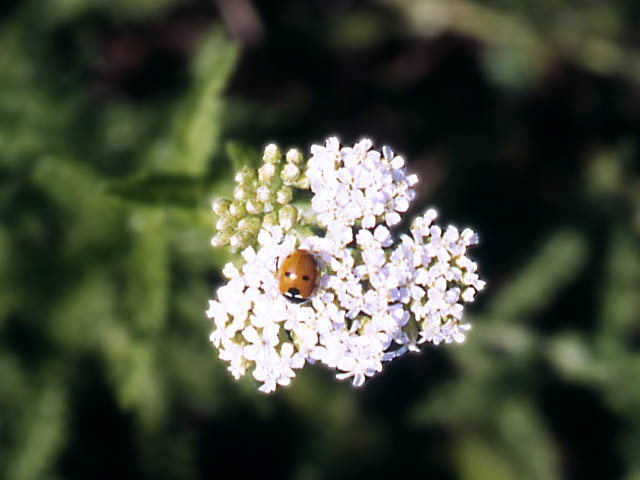
Below: A "C7" ladybug on a yarrow flower....from Dr. McBug's extensive and very informative website.


More information on Beneficial Insects:

Meet the Beneficial Insects (Organic Gardening Mag article)

Beneficial Insects 101

Viva la buzz!

Monday, March 3, 2008

For a healthy, happy job....


What a great outfit she's wearing for working on the farm!

I always put on my bullet bra and girdle and jodhoppers when i'm ready for some pitchforking.

Sunday, January 27, 2008

Growing Nontoxic Food...starting with seeds


I've been spending lots of time with seed catalogues lately. Two of my favorites that I'd forgotten about til I got their catalogues in the mail are:

Southern Exposure Seed Exchange
(a worker-owned co-op selling organic heirloom seeds, and just up the road in Virginia)

and

Abundant Life Seed Company
(also 100% organic seeds, heirlooms, and wonderful, though across the country)

Wednesday, January 16, 2008

Foodprint/Food Energy Meter

Here's a quick, simple little video from Local Harvest on ecological foodprint and the energy required to produce, process, and transport non-local food:

Watch Your Food (odo)meter