The Milkweed Diaries

Thursday, October 30, 2008

End-of-season Peppers


Earlier this week, we finally pulled the last of the pepper plants after nursing them along, covering them at night, and giving them a few more days, a few more days to finish their ripening.

Normally you would not see a green pepper in our kitchen. The ubiquitous green bell pepper found on salad bars, on top of pizzas, and in supermarkets everywhere across this great land is simply an unripe yellow, orange, or red pepper. I find green peppers unappetizing, and they are hard for our bodies digest (especially raw), but nonetheless green bell peppers seem to be consumed like they're going out of style. I have heard that the only reason the green bell pepper is part of the modern American diet at all is that it is easier to transport and less perishable when it is unripe than when it matures to yellow, orange, or red.

In any case, since the lows were fixing to be in the 20s, we gave up waiting and brought all of the remaining peppers in from the garden to ripen. The big, luscious yellow peppers that you see in the photo are the variety Corno di Toro Giallo, an Italian heirloom that was our heaviest-producing pepper this year. Orchid Peppers, the red crumpled-looking peppers that you can see in the upper left corner of the photo, were the most ornamental of the peppers we grew this year, with the Purple Cayenne coming in a close second. Other peppers in the mix pictured here include Golden Treasure, Red Cheese (pimento), Hotwax, Romanian, Jimmy Nardello, and Pacia Bajio (which ripen to a dark brown). You can buy seeds for all of these heirloom varieties from Baker Creek Heirloom Seeds.

Friday, October 24, 2008

Brewing Crabapples: Mead? Cyser? Scrumpy? Melomel?

Last week we harvested a bunch of crabapples from various trees on the campus of Warren Wilson College, and some from a tree on our land too.

The crabapples from the trees at the college are remarkably sweet, and the ones from the tree on our land have good flavor too. They are just so incredibly abundant and delicious that we wanted to put them to use somehow.


(Some of the crabapple haul is pictured above and below)

We decided to make a cider-ey fermented beverage from them.


We juiced the crabapples and used a basic mead recipe (see below).

I'm not sure what the resulting beverage should be called. There is apparently a lot of very highly specialized mead-making terminology. Meads made with fruit are known as melomel. But meads made with fruit juices are technically called metheglins. When the juice used in making a metheglin is from apples, the drink is called cyser. And scrumpy seems to be a catch-all term for strong and usually chunky fermented apple drinks. So who knows what to call this beverage that we are making. Do crabapples count as apples? Can it be simultaneously a mead, a melomel, a metheglin, and a cyser? All of those last three terms sound vaguely pharmaceutical to me, so I'm going with just plain Crabapple Mead, or maybe Scrumpy, which sounds sort of dirty and scrumptious at the same time.

Basic mead is very simple. Its ingredients are:
  • Water
  • Honey (we use 1 gallon for a 6 gallon carboy)
  • Fruit (optional), juiced, smushed, or sauced. A lot, or a little.
  • You can also add herbs and spices, and
  • Wild or storebought yeast
As you can gather, it's pretty flexible.

We had a lot of crabapples to juice, which was the most time-consuming part. A cider press would have helped.

We added some pears from a tree in our friend Sharon's yard, and an heirloom local apple I had leftover from my recent adventures in birthday cake. The pears and apples went into the mix after being turned to sauce in the food processor.

After the seemingly endless juicing process, we heated some water to dissolve the honey, whisked the honey in, added the crabapple juice, and poured it all into a big carboy with enough water to fill the jug up to its shoulders (where it begins to taper in to the neck).

For this batch, we added a pack of yeast (Lalvin K1-V1116 saccharomyces cerevisiae, $1 at Hops and Vines in West Asheville), but you don't have to. Wild yeasts will do the job. Either way, just throw everything in a jug and let it sit for a while, and see what happens.

Here's our 6 gallons of mead in the making. In a few days it should be bubbling mightily. After it's done with it's most fervent fermenting, we'll top off the carboy with water and let it go a while longer until the flavor's just right, and then we'll bottle it up.

Over the summer we made our first meads --one with wild blackberries and another with pears, and we've since made a very strong batch of pear-ginger mead. It's so easy, and so good, and so cheap! This batch will have cost $24 to make ($23 for a gallon of local honey and $1 for a yeast packet), but if you have your own bees or access to honey and use wild yeast, it could easily be free. We estimate that it will end up costing about $1 for a wine bottle-sized bottlefull of this mead. Beats the heck out of the price of a bottle of wine. And it's organic, local, and homemade with very simple, nutritious ingredients.

While we were stirring everything together, I was reflecting on how these fruit fermenting traditions must have evolved - what a great way to take fruit and honey, which are hard to come by in the winter, and preserve their goodness in a warming drink for the cold months.

I have a good feeling about this one, because the flavor of the crabapple juice was so very fine, and the edge of tartness from the crabs goes so well with the honey flavor. But only time will tell...

Thursday, October 23, 2008

Soup Season

When the air starts feeling cold, I start thinking about making soup and baking things. It feels biological, but I'm sure it must be at least partly socialized. Either way, when Fall comes, I make soup.

Right now on the stove is simmering a pot of one of my all time favorite soups: potato leek with sorrel.

At left: a variety of potatoes from the farmers market.


The sorrel is fresh from the garden, the potatoes and leeks are from the farmers market this week. The only other ingredients are butter, water, milk and/or half and half, salt and pepper. And that is quite perfectly enough. You can add some thyme if you want -- it's delicious with or without. I like to use a variety of varieties of potatoes, because it looks more interesting but also because I think it makes for a more complex taste.

Here's how to make the soup:

  1. Melt 4 Tbs butter in a soup pot.
  2. Chop a bunch of leeks. The proportions are very flexible, so you can use 5, 6, 8, 10 leeks-- whatever you feel like! But do use only the white and light green parts.
  3. Saute the leeks in the butter with some salt and pepper.
  4. Chop a bunch of potatoes -- at least 6 or 8.
  5. After a few minutes, add potatoes to the leeks and butter. Add a little more salt and pepper.
  6. Add a little water to keep the potatoes from sticking to the bottom of the pot.
  7. Chop the sorrel, and after the potatoes have cooked for a few minutes, throw the sorrel into the pot.
  8. Cook while stirring for a few more minutes until the sorrel is wilted and everything looks good and juicy. If you want at this point, you can add some fresh or dried thyme.
  9. Add a couple/few of cups of water and bring to a boil.
  10. Simmer until potatoes are soft.
  11. Add about a cup of milk and throw in some half and half or cream too if you have some on hand and like a richer taste. Taste the soup and add salt and pepper to taste. But don't overdo it because the flavors of the potatoes, leeks, and sorrel are so good all by themselves!
  12. Serve hot with chunky bread and red wine. Go ahead and top with sour cream just to complete the dairy overload. Sprigs of fresh thyme make a nice fancy garnish.
It's so good. Such simple ingredients, all in-season and local, and perfect for Fall.

Enjoy!

"Farmer in Chief" -- Michael Pollan's Open Letter to the Next President

Michael Pollan has an amazing new article in the New York Times Magazine: "Farmer In Chief".

Addressed to "Dear Mr. President Elect," Pollan's letter briefs the next president (pictured above, let's hope!)about food policy and lays out the case that this will be one of the most significant sets of issues that the new president will address during his tenure.

Here's a snip:

"Whatever we may have liked about the era of cheap, oil-based food, it is drawing to a close. Even if we were willing to continue paying the environmental or public-health price, we’re not going to have the cheap energy (or the water) needed to keep the system going, much less expand production. But as is so often the case, a crisis provides opportunity for reform, and the current food crisis presents opportunities that must be seized."

Pollan outlines specific ways that the next president can advance federal policies to encourage polyculture and discourage petrofertilizers, de-incentivize Confined Animal Feeding Operations (CAFOs) and factory farming, encourage Americans to reduce their meat consumption, preserve farmland, reregionalize the food system, and change the culture and politics of food in the US. The article includes specific steps that the federal government can take in all of these areas. In short, IT ROCKS. Michael Pollan strikes again with a perfectly-timed piece synthesizing and simplifying complex issues related to the politics of food.

Pollan ends the article with a fabulous idea:

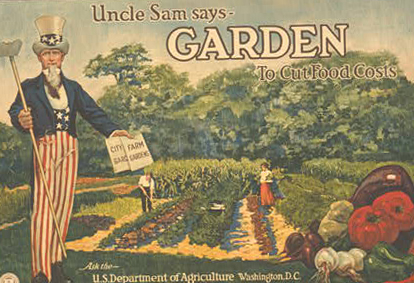
"The White House should appoint, in addition to a White House chef, a White House farmer. This new post would be charged with implementing what could turn out to be your most symbolically resonant step in building a new American food culture. And that is this: tear out five prime south-facing acres of the White House lawn and plant in their place an organic fruit and vegetable garden. When Eleanor Roosevelt did something similar in 1943, she helped start a Victory Garden movement that ended up making a substantial contribution to feeding the nation in wartime. (Less well known is the fact that Roosevelt planted this garden over the objections of the U.S.D.A., which feared home gardening would hurt the American food industry.) By the end of the war, more than 20 million home gardens were supplying 40 percent of the produce consumed in America. The president should throw his support behind a new Victory Garden movement, this one seeking “victory” over three critical challenges we face today: high food prices, poor diets and a sedentary population. ... Just as important, Victory Gardens offer a way to enlist Americans, in body as well as mind, in the work of feeding themselves and changing the food system — something more ennobling, surely, than merely asking them to shop a little differently."

Read the whole article here.


Read more about the movement to revive victory gardens here.


Monday, October 20, 2008

Adventures in birthday cake: natural food coloring, garden ingredients, and cold weather


My sister Mary celebrated her 30th birthday last week, and we planned festivities for her here in the valley, including a parade of birthday cakes over a four-day period.

I made two of the cakes. Mary's favorite color since she was a little girl has always been orange, and I was determined to create a nontoxic cake involving lots of orange.

In the past, I've made deep red frosting with butter, sugar, and beet juice, and I've played around with various spices (tumeric, paprika) to color foods, but they add their own strong flavor and aroma to whatever you are coloring. I already had a very specific flavor in mind (cinnamon rum butter cream) for the icing, so I faced a challenging task: achieve orange without compromising flavor.

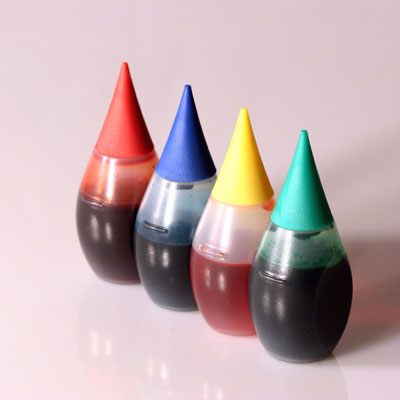
Why not just squirt in some red and yellow food coloring from the little box of brights you can buy in your supermarket? Well, to start with, I like a challenge. But I also like to provide a birthday cake that does not contain known carcinogens and/or fossil fuels. Plus, I wanted ingredients from our garden to be incorporated somehow.

Have a little coal tar with your cake!

The seven main food-dying agents approved for dying food in the US are all toxic -- most are derived from coal tar and the couple that are not are synthetic. Coal tar in my food? No thanks! Confirming the intuitive, common sense notion that ingesting coal tar is probably not good for us, studies have shown that coal tar-based food colorings are carcinogenic. Commercial food colorings are also known to cause allergic reactions, and I would argue that whether we notice an "allergy" or not, our bodies are not meant to process coal tar or synthetic dyes.

In my search for natural food coloring ideas, I came across an interesting summary of old-timey food colorings from Elise Fleming, compiled from cookbooks dating back as far as 1380: natural food colorings of yesteryear. Of course the idea of squirting coal tar or synthetic dye into food is a relatively recent notion, and the old fashioned ways were not only healthier but much more romantic as well (pressing rose petals, for instance).

But back to the task at hand. Carrots were the obvious orange ingredient, and at first I thought of grating them. But the thought of chunky frosting with recognizable carrot pieces in it did not seem like it would fly with the intended cake recipient. Instead, I tried juicing a carrot and stirring that into the icing with a little cinnamon and extract of rum. Viola! It wasn't safety zone orange, but it was definitely orange. I brightened it up by using grated orange zest and tiny flecks of carrots (conveniently left over from the juicing process) like sprinkles.

I used carrots that we grew plus homegrown nasturtiums & zinnias as garnishes, so the garden was well represented. Starfruit added more pizazz, and were in the right color family. The flowers almost didn't make it onto the cakes, because we had our first two nights of freezing weather this weekend. But we managed to protect the tender plants through the first frosty nights, long enough for them to contribute to the festivities.

Here's how the cakes turned out:


Saturday night's cake (above) and it's sister
Sunday brunch cake (below).

Both are vegan double chocolate mocha cakes (recipe below) with cinnamon rum butter cream icing.

They're garnished with nasturtiums, zinnia, starfruit, finely chopped candied ginger, carrot flecks, and orange zest.

Sunday's cake also features local limbertwig apples dipped in dark chocolate.


The recipe for the cake is one that I actually got from my sister Mary (the birthday celebrator) some years ago. I added a cup of chocolate chips to make it double chocolate.

Mary's Famous Ultra-Moist Vegan Mocha Cake

3 cups unbleached all purpose flour
2/3 cup unswee
tened cocoa powder
1 tsp. baking soda
1 tsp. salt
2 cups raw sugar
1 cup sunflower oil
1 cup brewed coffee
4 tsp. vanilla
1 cup semisweet chocolate chips
4 Tbs. apple cider vinegar

  1. Combine all dry ingredients and mix well.
  2. Combine all wet ingredients EXCEPT the vinegar and mix well.
  3. Mix the wet ingredients (again, excepting the vinegar) into the dry ingredients and mix until smooth.
  4. Add the apple cider vinegar and stir.
  5. Oil a baking pan and dust with cocoa.
  6. Bake at 375 for 25-30 minutes until a knife inserted in the center of the cake comes out clean.
  7. Cool, ice, cover with fruit, or otherwise fancify, and enjoy!


Cinnamon rum butter cream icing
I don't have exact proportions for this one...I just winged it.

Here's an approximate recipe:

1 stick of butter
Powdered sugar
1 tsp. extract of rum
1 tsp. cinnamon
A splash of half-and-half

Start with softening the butter. Mix in sugar until you have the desired consistency, add rum extract and cinnamon, and incorporate half-and-half to achieve exactly the right spreadability.

The birthday girl serving the second of the two cakes...

Wednesday, October 15, 2008

Sunflower Birdfeeders


Late blooming Mexican Sunflower 10/15/08

The sunflowers that bloomed all summer at the northeast corner of our garden are way past peaked, and have collapsed into an unsightly jumble of stalks and blown-out flower heads. If you read my post earlier this year, you know we grew dozens (maybe hundreds?) of sunflowers from seeds we saved from last year's garden. And the birds gave thanks.

Now that the sunflowers are spent, I've been wanting to clear them away so that the Mexican Sunflowers that are interplanted will have a chance to do their thing before the cold weather sets in (see above, the doing of the Mexican Sunflower thing). However, the birds are still feasting like mad on the sunflower seeds from the peaked out brown sunflower stalks.

Hence: creative ways to offer sunflower seeds to the birds.

Teepee birdfeeder


Cucumber trellis = birdfeeder


Hanging bird treats from a bean trellis


In other fall gardening news, the marigolds, nasturtiums, and zinnias are having a resurgence, and the there are bursts of orange, red, and yellow everywhere (below: zinnias).


Monday, October 6, 2008

October Garden Photos


French Breakfast radishes


Calendula still going strong


Orchid peppers ripening


Nasturtiums


Echinacea, fennel, and borage


Cucuzzi Italian Gourd at 3 feet ... how long will it grow?!?


Italienscher lettuce getting started


View to the west


Borage blossom


Love in a mist


Pink-streaked amaranth stalk with okra and marigolds


"Eggs and butter" marigolds