The Milkweed Diaries
Showing posts with label tomatoes. Show all posts

Sunday, August 1, 2010

Book Review, Transatlantic Gift Economy, and Cherry Tomato Art Installation

One day sometime in the past year, I issued a plaintive call to friends across the intertubes for someone to lend me a book I had built up a powerful urge to peruse: Preserving Food Without Freezing or Canning by the gardeners and farmers of Terre Vivante. My Internet Friend Annie Levy* (who is always referred to like so by her full title) promptly responded by GIVING me a copy! A woman who I have never met, who lives far across the ocean in Wales sent me a present in the mail! A really good present.
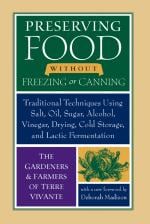
As soon as the book arrived I promptly read it from cover to cover and then commenced to re-reading, savoring, and luxuriating in each of its 197 pages. With prefaces by no less luminaries than Eliot Coleman and Deborah Madison, this dense little treasure of a book is a new favorite kitchen reference in our house.

The recipes and descriptions of techniques are simple, practical, and clearly held dear by the gardeners and farmers who offer them. Each entry includes the contributor's name and place of residence, and sometimes also information about growing, harvesting, or wildcrafting the ingredients and/or using the finished product. Over 100 people contributed to the book, and the brief personal notes that accompany their contributions make reading the book feel like sitting around a table sharing stories and techniques with other gardeners and cooks.

Some of my favorite entries are the simplest:

Plums, Variation 2.

Plums
Small crate
A pane of glass

Place whole plums in a small, well-ventilated crate, covered with a pane of glass. Keep the crate in the sun (ideally against a wall facing south).

~Annie Dijoud, St Joseph-de-Rivi

ère


The book begins with a section on root cellaring and other methods of in-ground preservation, including pits, trenches, and packing apples in elderflowers to impart a pineapple flavor. That is the sort of tidbit that I love. It continues on with chapters on drying; lactic fermentation; and preserving in oil, vinegar, salt, sugar, and alcohol. All of these methods are ancient, pre-electric food traditions that retain flavor and nutrients far better than modern methods. The flavors, textures, and look of these preserved foods remind me of shopping in open air markets in little towns in the South of France: encountering simple, delicious, and beautiful foods handcrafted with old-world grace.

I pulled this lovely little book down today when I was considering the abundance of cherry tomatoes coming out of the garden, and envisioning how nice they would look packed in a jar. But how to preserve their beauty and sweetness without compromising their vitamin-packed nutritional punch?

I looked up "cherry tomatoes" in the index of PFWFC and discovered this recipe:

Cherry Tomatoes

Cherry tomatoes
Small onions or shallots
Cider vinegar or lemon juice ( 1-2 Tbs per 16-oz jar)
Fresh basil, tarragon, oregano, etc. (to taste)
Coarse salt
Olive oil
Canning jars and lids

"You must start with cherry tomatoes that are very firm and ripe. ...Wash and dry the tomatoes. Peel...the onions or shallots.

Prepare scalded or serilized 16-ounce jars. Fill them with tomatoes, alternating with a few onions and herbs. When the jars are filled to about one and half inches from the rim, sprinkel with a pinch of coarse salt. Add one or two tablespoons of cider vinegar or lemon juice, and cover with olive oil.

Close the jars with a very clean lid, and store them in a rather cool place (10 to 15 C/50-59 F). The tomatoes will be ready to eat in two to three months and will keep for up to a year."

~Anne Duran, St. Front

Jars ready for capping and storing: Pearly Pinks packed in oil with basil and mixed cherry tomatoes packed in oil with pearl onions and basil.


One of the great things about simple, heat-free preservation methods such as this one is that you can quickly process small batches without lots of effort -- I packed two 16 ounce jars and an 8 ounce jar this evening and I'll continue packing more as the tomato season continues.

The jars of little jewel-tone tomatoes are as lovely as I had hoped. They feel like a little art installation on the top shelf of my fridge.

Thank you, Annie Levy, for your generosity. And thank you to the gardeners and farmers of Terre Vivante.


*I met My Internet Friend Annie Levy via the Wild Fermentation facebook group. A wonderful resource for fermentation lovers, and it turns out, a place to encounter lovely, facinating, and generous people.

Tuesday, September 8, 2009

Blight-resistant tomato varieties

Orange Banana tomato ripening in our garden, despite advanced late blight.


This growing season has provided a fabulous opportunity to find out which tomatoes can produce under awful conditions. In other words, it's been a terrible, horrible, no good, very bad year for tomatoes, so we got a chance to see what varieties can survive the perfect tomato storm.

We planted 19 open-pollinated tomato varieties (almost all heirlooms) and one hybrid variety, and almost 100% of the plants have been decimated by disease. We had the wettest May in recorded history, followed by heat, early blight, more rain, and late blight. Fortunately for us, we got our plants in late, so we missed a lot of the wettest weather. Even so, the late blight has taken a crippling toll.

Now the good news: some of the heirlooms do seem to be able to produce, albiet significantly smaller yeilds, despite the blight.

Here are the survivors:

Flamme tomatoes from our garden


Flamme (also called Jaune
Flammé):

A French heirloom that produces small (egg-sized), round, orange tomatoes. We purchased Flamme seeds from Tomatofest.

The plant is very productive, and the fruit is sweetish with good tomato flavor. It is not as juicy as the big, fat heirloom slicers, but is still good for sandwiches and fresh eating, and great for sauce, salad, and salsa.

It could be that its just the sheer productivity of this variety that helps it outrun the blight, but it does seem to also have a bit thicker skin and lower moisture content, which I think helps keep the tomatoes from rotting.

Cream Sausage tomatoes from our garden


Cream Sausage:

This is a favorite tomato of ours that we grew last year, with excellent flavor and texture and beautiful, creamy pale yellow skin.

Cream Sausage, also called Banana Cream, is fleshy and sweet, great for cooking and eating fresh. We used lots of these last fall in salsa-making.

We ordered the seeds for Cream Sausage from Baker Creek and Seed Savers Exchange offers it as well.

Orange Banana:

These are fat, juicy, flavorful orange paste tomatoes (pictured at the top of this post). They are great for drying, eating fresh, and using in salsa and tomato sauce. They have a really excellent sweet, tomato-ey flavor and a lovely texture.

We grew and loved these last year, and ordered Orange Banana seeds this year from Baker Creek.

Honarable Mention: Cherry Tomatoes

For sheer profusion of fruit and rampant growth, cherry tomato plants cannot be matched. Their fast and furious growth and abundant fruiting allow them to outrun blight. We use cherry tomatoes for drying, cooking, and salsas, and eat tons of them fresh straight from the plant.

Sungold ("the dessert tomato" as my friend Kathryn calls it), and Black Cherry, a very tasty variety which we are growing for the first time this year, have been kicking out the tomato jams in our garden. The cherry tomatoes started fruiting early and are still producing heavily. The plants are blighted, but they hardly seem to notice. At this point in the season, they are sprawling all over the place with that boisterous cherry tomato spirit, and you can pluck a Sungold from almost anywhere you stand in our garden.

~ ~ ~

Next year, we're going to try growing all but the cherries under cover in the hoophouse, but in the meantime I'm grateful for the tough tomatoes that can survive a rough season like this summer.


Monday, October 6, 2008

Fall Kitchen and Garden Projects & Recipes


Most of the flat surfaces in our little house are covered with various fall garden and kitchen projects -- soaking spinach seeds, drying harvested beans and sunflower seeds, processing vegetables for salsa, pickles, and other preserving projects, and too many other large and small projects to list. I love the end of the summer growing season--putting the garden to bed and putting food away for the cold months, planting fall greens, saving seeds, pickling things.

I've posted a few pictures of some of these projects, followed by two October-appropriate recipes.

Above: The kitchen table covered with projects in process--peppers for sweet pepper hash (recipe below); green tomatoes for brine-pickling (recipe below
); zinnia, marigold, and sunflower seeds for planting next year; winter squash curing; tomatoes and peppers for salsa; love-lies-bleeding amaranth seed heads to be threshed for eating and replanting


Left: Christopher shelling dry black beans with moral support from Frankie


Left: Prepping a bed for fall planting, after pulling summer bean and squash plants


Left: Fall lettuce starts in the
garden


Below:
"Red Zinger" hibiscus and climbing nasturtium seed pods drying...most of the hibiscus will be for tea and the rest will be for planting next year


Fall Recipes:

Brine-Pickled Green Tomatoes
This is a great way to use tomatoes that you have to pick green as cold weather ends the tomato season. My recipe is loosely based on one from Marilyn Kluger's classic book "Preserving Summer's Bounty."

Ingredients:
Unripe tomatoes to fill a jar or ceramic crock
Pickling spices to taste
Fresh or dried dill to taste
10-20 cloves garlic, peeled
Apple cider vinegar
High-quality salt (I use coarse celtic sea salt)
Water
  • Wash and clean tomatoes -- make sure not to use any tomatoes with cracks, mold, or rotted spots
  • Layer the bottom of a ceramic crock or large glass jar (such as a cookie jar) with spices and dill. I use various combinations of dill, whole black pepper corns, celery seed, caraway seed, and whole mustard seed.
  • Fill the crock or jar with tomatoes and garlic
  • Mix your brine solution using the following proportions: for every gallon of water, use 1 cup of vinegar and 2/3 cup salt
  • Pour the brine over the tomatoes and garlic to cover, with at least an inch of brine above the top layer.
  • Place a glass or china plate on top of the tomatoes to keep them submerged, and weigh down by sitting a jar filled with water on top of the plate.
  • Cover with a clean cloth and wait!
  • Don't stir, but do remove any scum or mold that may form.
  • After 3 weeks or so of fermentation, pack into jars and either heat process (which will kill the beneficial live cultures) or just refrigerate (keeping in mind that the pickles will not keep as long without heat processing). I never heat process brined pickles because I want to keep the food alive after fermentation.


Sweet Pepper Hash
I learned this recipe from my friend Melissa years ago when we lived together. It is so ridiculously delicious that I've made it every year since when local peppers are ripe. You can find a version of this in "Preserving Summer's Bounty" too, but mine omits green peppers, which are not ripe and so not nearly as sweet as red, yellow, and orange ones, and uses honey instead of sugar. I think honey tastes much better in this recipe, and makes for a nice syrupy texture--plus, honey is better for you and is available locally (unlike cane sugar). You can also add a hot pepper or two to make a spicier hash.

At left: the hash before cooking and canning


This recipe makes about 3 pints. We usually at least double it. Opening up a jar in mid-winter is like a taste of summer -- a blast of bright, sunshiny, summer sweetness. Use it as a condiment, or mix in with soups or baked beans -- it's so addictive that we've been known to eat it straight by the spoonful.

Ingredients:


12 small onions
24 ripe sweet peppers of various varieties
2 cups honey
2 cups apple cider vinegar
2 Tbs Salt
  • Peel the onions and remove the seeds from the peppers.
  • Chop the vegetables by hand or use a food processor to chop into relatively small pieces.
  • Put your chopped onions and peppers in a big bowl and sprinkle with the salt.
  • Pour boiling water over the vegetables and let stand for 15 minutes.
  • Combine the honey and vinegar in a large pot and bring to a boil.
  • Drain the peppers and onions and add to the boiling syrup.
  • Reduce heat and cook slowly for 15 minutes.
  • Meanwhile, sterilize jars and lids in a boiling water bath
  • Pack into sterilized jars, leaving 1/4 inch head space.
  • Adjust lids and process for 5-10 minutes in a boiling water bath.

Monday, September 1, 2008

Salsa!

Despite having foisted tomatoes on numerous friends over the weekend, I am still engaged in a losing battle to keep up with the harvest.

So I made salsa this morning after planting a flat of Giant Musselburgh Leeks and stepping up brassica seedlings for the fall garden.

Non-tomato ingredients pictured above on their way to the food processor
.

Here's a rough recipe:

  • All sorts of tomatoes--I used Green Zebra, Orange Banana, Fox Cherry, Roma Rio Grande, Red Fig, Belize Pink Heart, and Pruden's Purple
  • Red and white onions
  • Yellow and red sweet peppers
  • 2 jalepeño peppers (I used purple and red varieties)
  • Flat leaf parsley (because I like it in almost everything)
  • A head of garlic, separated and smashed/peeled
  • Salt & pepper to taste
Chop a few of the prettiest tomatoes to salsa-sized chunks and throw the rest except the salt and pepper in a food processor with everything else; process in batches. Enjoy!

I froze a few pints of this and kept some fresh for topping various things.

Thanks to all who accepted tomatoes into your homes over the past month.... There's more where those came from!

Thursday, August 28, 2008

Tomato wars* and pesto update

Yesterday morning, I went out to the garden to see how it was doing after all of the RAIN (!!!) and was met with an onslaught of tomatoes.

Because of all the wetness, a lot of them are cracking and demanding to be dealt with post haste. I harvested a huge basket full (above), brought them in and sorted them into piles according to the level of urgency with which they needed to be eaten, processed, or somehow handled.

I had a lot of other things to do yesterday, so I made a tomato sandwich and tried to ignore the tomato troops massing on my borders.

The sandwich was really quite tasty, and reminded me that tomatoes are not the enemy, but I still felt under seige.

Then, this morning on my garden walk-through I discovered at least TWICE as many ripe or over-ripe tomatoes as yesterday. Plus the rain knocked a bunch of their unripe brethren and sisteren off the vine, and I couldn't let them rot, so I took them in too and gave them windowsill space.

Tomatoes massing on the border

All of which led to a grim report to CF over our morning beverages: "The tomatoes are winning."

So today I put aside everything else and got busy making sauce.

At left are some chopped tomatoes en route to the sauce pot. I'm simmering these and their cohorts on super-low heat with sweet peppers, oregano, basil, parsley, and garlic--all from the garden--plus some sweet onions I bought at the farmer's market yesterday, along with olive oil, salt, and black pepper.

It's smelling really delightful already.


Meanwhile, I think I have perfected the pesto that I've been using as a heat-free way to preserve beet tops. It's a LOT more tasty when the beet and other greens are cut with some traditional basil.

Here's a recipe (with no quantities/measurements - sorry!)


PESTO

1 part basil (maybe about 2 cups?)

1 part mixed greens - I used dark red Bulls Blood beet tops, lambsquarter (magenta spreen and wild green), and flat-leaf parsley

sunflower seeds, garlic, olive oil, and lemon juice

Throw it all in a food processor, process, and enjoy!


This is some SERIOUSLY good pesto. And really beautiful with all of the pink and red leafy greens. I've been eating it with a spoon, straight up. I think if I put some on a tomato sandwich I might pass over to the other side. So it turns out that I can live in peace with tomatoes and their ilk (basil).


A small jar of really good pesto


* NOTE to Quakers, pacifists, and all of my fellow anti-violence people: apologies for all of the war imagery! If anyone can help me come up with some diplomatic solution, I'm open to it!


PS: Thanks be to Mother Earth & Hurricane Faye for the rain!

Sunday, August 10, 2008

High Harvest

Clockwise from 6:00: peppers, okra, cherry tomatoes, dill, onions, tomatoes, garlic, japanese long cucumbers, zephyr squash, beet greens and celery greens, orange cucumbers, beets, italian edible gourd, more tomatoes, and carrots.

We are experiencing massive garden overload!

Produce is pouring out of the garden faster than we can eat, preserve, and process it.

It's amazing how generous the earth is. We're trying to remember to have gratitude for all this abundance as tomatoes, cucumbers, and squash overflow out of our kitchen onto every flat surface in the house.

Anyone want some refrigerator pickles or brined veggies? Tomatoes? Help us eat this food!


A garden shot....


Meanwhile, the garden is swarming with pollinators, beneficials, and a few detrimentals (squished a spotted cucumber beetle today). Sunflowers, fennel, and ironweed are surrounded by clouds of buzzing, feeding, pollinating bugs - hurrah!

Bees enjoying a sunflower...

Friday, July 25, 2008

Friday, May 23, 2008

Heirloom tomatoes and the local food guide....


Foxcherry


Pruden's Purple


Golden Sunray


Cream Sausage

We just finished planting 39 heirloom tomato plants....woohoo!

Most of the varieties, including those pictured above are from seeds from Baker Creek via Sugar Creek Farm, where we're taking our greenhouse and gardening class, except one variety, some Sungold seedlings I bought at the farmers market from Patryk Battle of Sparkling Earth Farm.

Planting tomatoes...broccoli, cauliflower, and garlic in the foreground.

We planted 15 varieties: Pruden's Purple, Cream Sausage, Roma Rio Grande, Orange Banana, Golden Sunray, Carbon, Foxcherry, Sungold, Red Fig, Mama Leon, German Tree, Sarah Black Purple, Belize Pink Heart, Persimmon, and Emerald Evergreen.

Some of the tomato babies planted in a south-sloping raised bed with Genovese Basil seedlings...

In other news, I learned at the ASAP board meeting last night that 250,000 print copies of the 2008 Local Food Guide are OUT!

You can get it in all sorts of places in WNC, and it's also available online HERE.